 This will be Emmy's last post. She has been sick for a couple of weeks now. Ann will be taking her to the vet tomorrow. She was the best kitty. Love you Emmy. Rest in peace.
Sunday, April 1, 2012
LAST DAYS
This will be Emmy's last post. She has been sick for a couple of weeks now. Ann will be taking her to the vet tomorrow. She was the best kitty. Love you Emmy. Rest in peace.

Friday, January 27, 2012

Monday, December 26, 2011
Christmas 2011
 ANN
 EMMY & MICHAEL
 SARAH & ANN
 SARAH
 WJS
We had a great Christmas Eve with Sarah & Michael. Andrew & Melissa couldn't be with us. Christmas Day we went to see Grand Pa Koennicke. Hope everyone had a wonderful Christmas
Mario & Skittles

Our good friend Mario and cousin Skittles went to the big litter box in the sky. Our condolences to their families.
Saturday, February 19, 2011


Monday, November 15, 2010
How Cats Drink
For Cats, a Big Gulp With a Touch of the Tongue
By NICHOLAS WADE
Published: November 11, 2010

It has taken four highly qualified engineers and a bunch of integral equations to figure it out, but we now know how cats drink. The answer is: very elegantly, and not at all the way you might suppose.

Multimedia

 Get Science News From The New York Times »
Cats lap water so fast that the human eye cannot follow what is happening, which is why the trick had apparently escaped attention until now. With the use of high-speed photography, the neatness of the feline solution has been captured.
The act of drinking may seem like no big deal for anyone who can fully close his mouth to create suction, as people can. But the various species that cannot do so — and that includes most adult carnivores — must resort to some other mechanism.
Dog owners are familiar with the unseemly lapping noises that ensue when their thirsty pet meets a bowl of water. The dog is thrusting its tongue into the water, forming a crude cup with it and hauling the liquid back into the muzzle.
Cats, both big and little, are so much classier, according to new research by Pedro M. Reis and Roman Stocker of theMassachusetts Institute of Technology, joined bySunghwan Jung of the Virginia Polytechnic Institute andJeffrey M. Aristoff of Princeton.
Writing in the Thursday issue of Science, the four engineers report that the cat’s lapping method depends on its instinctive ability to calculate the point at which gravitational force would overcome inertia and cause the water to fall.
What happens is that the cat darts its tongue, curving the upper side downward so that the tip lightly touches the surface of the water.
The tongue is then pulled upward at high speed, drawing a column of water behind it.
Just at the moment that gravity finally overcomes the rush of the water and starts to pull the column down — snap! The cat’s jaws have closed over the jet of water and swallowed it.
The cat laps four times a second — too fast for the human eye to see anything but a blur — and its tongue moves at a speed of one meter per second.
Being engineers, the cat-lapping team next tested its findings with a machine that mimicked a cat’s tongue, using a glass disk at the end of a piston to serve as the tip. After calculating things like the Froude number and the aspect ratio, they were able to figure out how fast a cat should lap to get the greatest amount of water into its mouth. The cats, it turns out, were way ahead of them — they lap at just that speed.
To the scientific mind, the next obvious question is whether bigger cats should lap at different speeds.
The engineers worked out a formula: the lapping frequency should be the weight of the cat species, raised to the power of minus one-sixth and multiplied by 4.6. They then made friends with a curator at Zoo New England, the nonprofit group that operates the Franklin Park Zoo in Boston and the Stone Zoo in Stoneham, Mass., who let them videotape his big cats. Lions, leopards, jaguars and ocelots turned out to lap at the speeds predicted by the engineers.
The animal who inspired this exercise of the engineer’s art is a black cat named Cutta Cutta, who belongs to Dr. Stocker and his family. Cutta Cutta’s name comes from the word for “many stars” in Jawoyn, a language of the Australian aborigines.
Dr. Stocker’s day job at M.I.T. is applying physics to biological problems, like how plankton move in the ocean. “Three and a half years ago, I was watching Cutta Cutta lap over breakfast,” Dr. Stocker said. Naturally, he wondered what hydrodynamic problems the cat might be solving. He consulted Dr. Reis, an expert in fluid mechanics, and the study was under way.
At first, Dr. Stocker and his colleagues assumed that the raspy hairs on a cat’s tongue, so useful for grooming, must also be involved in drawing water into its mouth. But the tip of the tongue, which is smooth, turned out to be all that was needed.
The project required no financing. The robot that mimicked the cat’s tongue was built for an experiment on the International Space Station, and the engineers simply borrowed it from a neighboring lab.
Sunday, October 31, 2010


Wednesday, September 29, 2010


Tuesday, September 7, 2010
Nice Pictures

Sarah


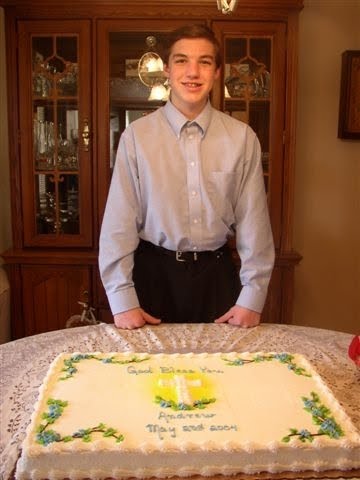
Sarah & Andrew
Laurie took some great pictures last Saturday. Thanks Dan & Laurie.
Baptized Cat

Matt..18:4-5
"Therefore, whoever humbles himself like this child is the greatest in the kingdom of heaven.
And who ever welcomes a little child like this in my name welcomes me. "
Johnny's Mother looked out the window and noticed him "playing church" with their cat.
He had the cat sitting quietly and he was preaching to it. She smiled and went about her work. A while later she heard loud meowing and hissing and ran back To the open window to see Johnny baptizing the cat in a tub of water.
She called out, "Johnny, stop that! The cat is afraid of water!"
Johnny looked up at her and said, "He should have thought about that before he joined my church."
Thanks Laurie for the picture and story.
Monday, August 9, 2010
The Agony of De Feet

Cat Feet Structure
As we all know, normal cats have four feet, two in the front and two in the back. A cat's two front feet are commonly called paws.
On their front paws, normal cats have five toe pads and five claws each. A cat's back feet each have four toe pads and four claws. Cats also have one large paw pad on the bottom of each foot. Both the toe pads and the large pad on each foot may be pink or they may be pigmented.
Genetic Abnormalities
Some cats have an autosomal dominant genetic trait that causes them to have extra toes. This is called polydactyly. A cat with extra toes on its front paws is the most common form of polydactyly, but extra toes can also be on the back feet. I once had a cat with extra toes on both his front and back feet. In fact, he could almost use his front paws like hands when he was playing with his cat toys. Polydactyly in cats usually causes no problems.
Some long-haired cats have fur growing in between their toes. If it is long enough, the fur sometimes covers part of the foot and gets in the cat's way. If the fur growing between your cat's toes is very long you may want to trim it with scissors so that the fur doesn't get in the cat's way when walking or playing. To trim this fur it is best to use scissors with blunt ends because cats tend to move around a lot anytime you do anything to their paws.
Cats' Paw Pads
A cat's paw pads are made of rough, hairless skin that is much thicker than the skin on the other parts of its body. Despite their thickness, cats have lots of nerve endings in each pad and they can detect vibration, temperature, and other tactile information through them.
Cats also have sweat glands in their paw pads. Cats don't produce sweat on the rest of their bodies like humans do. The paw pads are the only places on a cat that sweats.
Cats' Claws
Cats claws are made of keratin, which is a protein. A cat's claws are covered by an outer layer called the sheath, which consists of dead keratin cells. Running through the center of each claw is the quick. The quick contains blood vessels, nerves, and new keratin cells responsible for nail growth. The quick is pink in color because it contains the blood supply.
A cats claws grow continuously. As a cat's nails grow, they shed the sheath by scratching on a rough surface. This is why it is important to provide your cat with a scratching post or some other area where your cat is allowed to scratch.
Cats can extend and retract their claws at will. Cats use their claws for climbing, catching prey, or defending themselves.
Common Foot Problems in Cats
Foot pad problems
Sometimes a cat's foot becomes injured. This can happen during a fight with another cat or other animal, and sometimes the cat simply steps on something sharp, such as a burr or glass. If possible, it is best to have your veterinarian remove the foreign object from your cat's foot rather than trying to do this yourself.
If you need to remove it yourself, you can use tweezers. Keep in mind that your cat will be in pain and may bite during the removal (which is why it is best to have your trained veterinarian do it). After the object has been removed, the wound can be cleaned with a cotton ball that has been soaked in hydrogen peroxide diluted with water.
Even if you are able to remove the foreign object you should take your cat to the vet to make sure its paw doesn't get infected. Any time that a cat's foot pad is damaged there is a risk of infection. Because cats are walking around on the injury all sorts of germs are able to enter, not to mention the bacteria on the object that caused the wound in the first place.
Symptoms of an infected paw pad, or an abscess in your cat's foot pad, include holding the paw up and refusing to walk on, or put any weight on it. Another symptom is swelling of the paw. Foot pad infections in cats can be quite severe, but can be treated with antibiotics obtained from your veterinarian.
The best way to prevent foot pad injuries in your cat is to keep him or her indoors.
Nail Problems in Cats
Torn Nails
Sometimes cats will get their claws stuck in something and when they jerk their claws loose they tear the nail. Symptoms of a torn nail are blood around the nail and also limping and refusing to put weight on the foot. Like injured paw pads, torn nails commonly get infected. Remember that your cat is scratching around in the litter box with its injured foot where all kinds of bacteria are present.
A cat with a torn nail needs to see a veterinarian. Typically, your veterinarian will prescribe topical antibiotics for a torn nail. If the torn nail is severely infected your vet may also prescribe an oral antibiotic. Usually, the nail will heal in a few weeks.
The best way to prevent a torn nail is to trim your cat's nails on a regular basis and also by providing your cat with an adequate scratching post so they routinely remove the outer nail sheath.
Nails Embedded in Paw Pad
Sometimes when a cat's nails become too long they curl under and embed themselves in your cat's foot pad. Like other foot pad injuries this can be quite painful to your cat. This problem most commonly occurs in older cats that no longer groom themselves very well or exercise very much. Often during grooming cats will removed the outer nail sheath with their teeth or an active cat will use the scratchpost to remove the sheath.
If the outer nail sheath doesn't get removed, it sometimes curls back toward the foot pad and gets embedded in it.
You can prevent this from happening by keeping your cat's nails trimmed. If your cat has gotten to the point where the nails are embedded in its paw then it is best to have your veterinarian trim your cat's nails because your cat will be in some pain.
If you are able to cut your cat's nails yourself just be careful not to cut down too far. If you cut into the quick, where the nerve endings and blood supply are located it will be quite painful for your cat and your cat will bleed profusely. For tips on trimming your cat's nails and a photo of where the quick is located please see Trimming Cats Claws.

Monday, July 19, 2010
Cousin Cletus
 Looks like Cousin Cletus from Tennessee should have switched to light beer a long time ago.
Thursday, July 15, 2010
CAT & DEER

Deer visits cat in yard every morning!
A cat at Harrisburg has a special friend that visits every morning.
The owner finally took pics.
Those we love don't have to be like us.
Monday, July 5, 2010
VET
 I went to the VET today. Looks like I have kidney disease, chronic pancreatic disease, urinary tract infection, and possibly leukemia. It appears that I am not diabetic, and my thyroid is ok. Could be worse. Wish I had that Obama care though.
Fourth of July

Sunset 7-3-10

Sunset 7-4-10

Sunset 7-4-10

Molly

Tootsie
We had a great time at Dan and Laurie's for the 4th of July. Even the pug's had fun. Thanks Dan & Laurie for everything. We appreciate it!
Subscribe to:
Posts (Atom)